
Manual vs electric sofa beds: choosing a conversion you can live with
Compare manual vs electric sofa bed options, pull-out and click-clack mechanisms. See real Furver models and learn what to test before you buy.
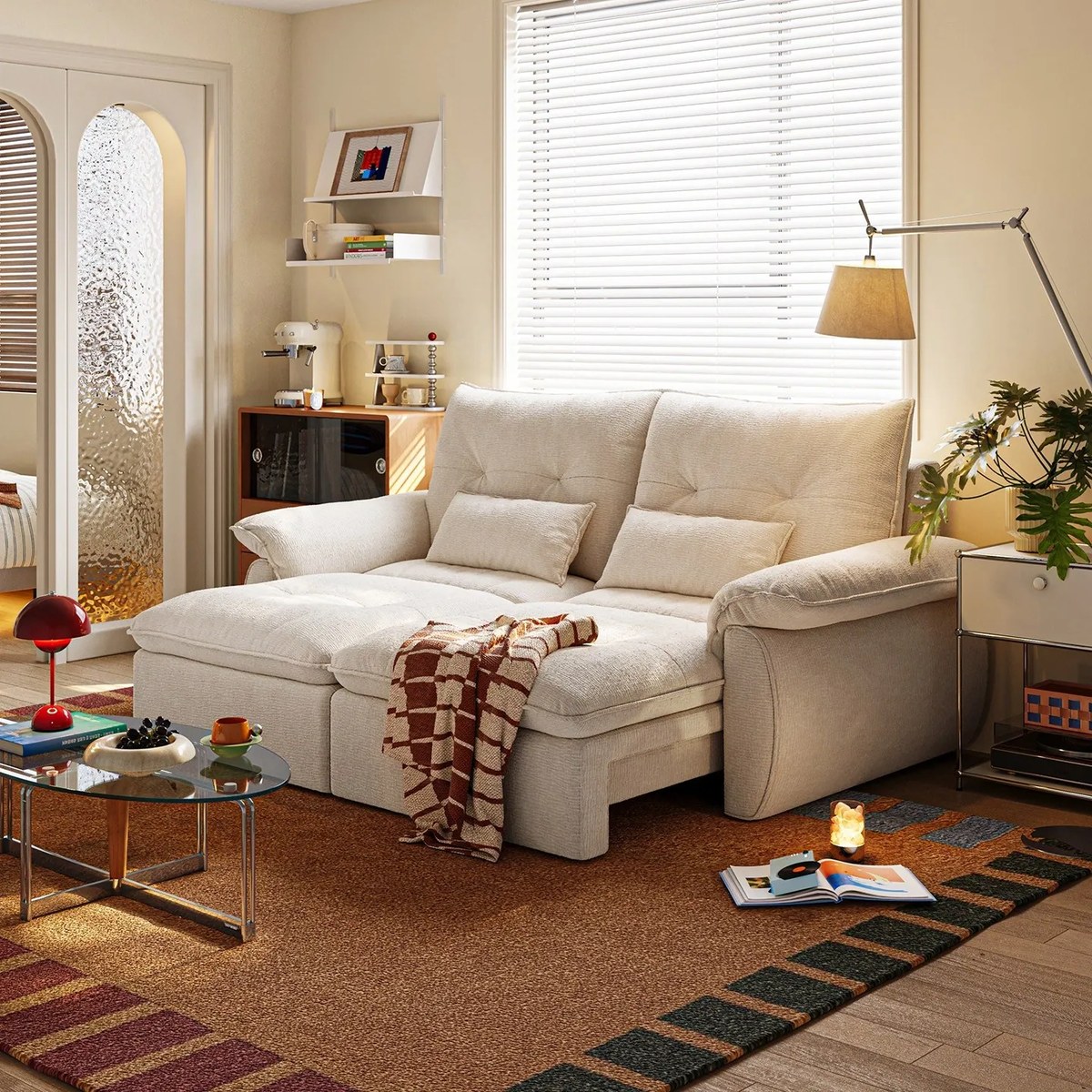
Guests are arriving after dinner. The coffee table needs somewhere to go, the sofa cushions need a temporary home and someone has to turn the seating into a bed. A handle or button is only one part of that job. The useful sofa bed is the one you can set up comfortably, then put back the following morning.
A manual vs electric sofa bed comparison should begin with what actually moves. A manual mechanism relies on you to perform its operating actions. An electric sofa bed powers a specified movement, which may be seat adjustment rather than every stage of conversion. Find out what the motor handles and what remains for you to do.
Furver's Manly Fabric Sofa Bed, Manly Electric Sliding Fabric Sofa Bed and Nara Sofa Bed offer three different starting points. Comparing their adjustments helps you choose around the way the room works during the week, as well as the occasional overnight stay.
Separate the movement from the power source
A convertible sofa changes between seating and a sleeping configuration. That description does not establish how it opens, what you sleep on or whether it needs electricity. Start with those questions before deciding which label belongs on your shortlist.
Some descriptions identify a movement; others identify how that movement is powered. Pull-out and electric are therefore not necessarily competing categories. A design can use a powered sliding section while leaving other parts for the user to position.
| Description | What it helps you understand | What still needs checking |
|---|---|---|
| Pull-out sofa bed | A section draws forward as part of forming the bed | Any lifting, unfolding, cushion removal or backrest adjustment that follows |
| Click-clack sofa bed | A hinged arrangement changes between sitting and flatter positions | The release, locking and return action for that model |
| Electric sliding sofa bed | A motor drives a sliding movement | Exactly which part moves and whether the rest of conversion is manual |
| Adjustable-backrest sofa bed | The backrest offers a choice of positions | Which settings are intended for sitting, lounging or sleeping |
Treat the description as a way to organise a demonstration. The number of positions is less useful than knowing that one suits your ordinary sitting position and another produces the intended sleeping setup.
Pull-out vs click-clack sofa beds: follow the whole action
With a pull-out sofa bed, watch what happens after the first section comes forward. Does another part lift into place? Is there a separate mattress, or do upholstered sections form the sleeping surface? Where do the loose cushions go? The complete sequence matters more than the first movement.
The Manly Fabric Sofa Bed combines a pull-out design with a five-position adjustable backrest. It is worth considering when you want to alter your lounging angle as well as prepare a bed. Try the upright position first, then the settings you would use with a book or while watching television.
An adjustable backrest sofa bed earns its place when those positions are useful to you. More settings do not automatically mean a better fit. Ask how the backrest moves between them and how it returns to the starting position. Then have the complete bed demonstrated, including any cushions that must be repositioned.
The Manly description identifies its pull-out design, but does not give an operating-force measurement or a complete conversion sequence. Try the exact version rather than assuming every pull-out opens with one easy tug. Notice where you must stand and whether you can reach the moving part without leaning over nearby furniture.
For a clearly documented click-clack example, IKEA's NYHAMN with foam mattress converts by lifting its underframe and lowering the backrest. IKEA specifies that its cover can remain fitted during the change.
That gives you a concrete alternative to compare. Try the lifting and folding action, then the return to sofa position. A smooth demonstration by someone familiar with the mechanism does not establish how it will feel to the person using it at home. Choose the action you can repeat comfortably within your room.
An electric sliding sofa bed can change everyday seating
Powered adjustment may be useful well before anybody needs a bed. You might prefer a shallower position with your feet on the floor during the day, then want more room to stretch out in the evening. If that change is part of your normal routine, seat-depth adjustment deserves attention in its own right.
The Manly Electric Sliding Fabric Sofa Bed specifies motorised seat-depth adjustment. It is the relevant Furver example to investigate when you want a sofa bed with adjustable seat depth, rather than choosing solely around occasional guest use.
Start in the position you would use most often. Find the control while seated, then move through the available range as demonstrated. Stop at intermediate positions instead of going directly to maximum extension. A position between the two ends may be the one you enjoy every evening.
Try it with everyone who regularly shares the sofa. One person may like sitting upright while another prefers a deeper seat. Establish which section the control moves and how that affects the other seating positions. The product name does not answer those questions, and they matter more in a shared living room than a quick solo trial suggests.
Ask to see the full sleeping setup separately. Powered seat movement does not establish a powered backrest, automatic cushion handling or a bed conversion completed entirely by a button. The useful comparison is how much of your actual routine the powered movement takes care of.
If the adjustment is something you will use only twice a year, compare that benefit with a design whose ordinary seat you already enjoy. If you change sitting depth most evenings, the feature has a different role in the purchase. Either choice can make sense once the expected use is clear.
Nara offers another kind of adjustment
The Nara Sofa Bed lists six adjustable positions on both sides. Its appeal starts with the choice of sitting and reclining arrangements, which is different from selecting a sofa for powered seat movement.
Try the positions in the order you would use them. Sit with a book, change to a lounging position and return to sitting. Ask which parts are meant to be adjusted and where you should hold them. You should be able to recognise when a section is in its intended position without guessing from an unfamiliar sound or movement.
For overnight use, have the complete sleeping configuration demonstrated. Look at how the surface is supported and how the adjustable sections return afterwards. The six-position description alone does not identify Nara as a click-clack, a futon or an electric design.
Nara is worth considering when changing the shape of the seat is part of the appeal. If your main requirement is a particular bed mechanism or a separate mattress, establish that requirement first and compare the complete setup. A flexible lounging arrangement and a suitable sleeping arrangement are two things to assess, even when they come in the same piece of furniture.
Test a full evening-to-morning changeover
Ask to see one uninterrupted demonstration, then repeat the relevant actions yourself with guidance. Follow the model's operating instructions and keep loose belongings, children and pets away from moving parts. This is an opportunity to understand the process before furniture is delivered.
Begin with the sofa as you would normally use it
Start with the ordinary cushions in place and the sofa in a normal sitting position. A demonstration beginning with everything already cleared can conceal much of the work. Identify the items that need to move before the mechanism starts, including anything sitting on an arm or beside a sliding section.
Find the handle or control from a practical position. Notice whether you can reach it while seated, or whether you need to stand to one side. If another person will usually prepare the bed, they should try it too. Familiarity and reach can affect the experience as much as the mechanism's label.
Follow each change in direction
Watch for a transition between sliding, lifting and lowering. Ask where the user is meant to support a part and where hands should stay clear. Do not improvise a lifting point because it looks convenient. The right demonstration explains the intended action without asking you to force a reluctant section.
Pause at the places where the action changes. Is there a latch to release? Does a backrest need to pass through another position before resetting? These are questions for the selected model, not instructions that can be borrowed from a similar-looking sofa.
Finish the sleeping setup
Continue until the bed is ready for bedding, rather than stopping when the mechanism opens. Account for loose cushions, separate panels and any supplied components. Look at the finished surface and check the positions in which the manufacturer intends it to be used for sleeping.
Ask which bedding can stay fitted during conversion and which must be removed. A sheet, protector or topper may affect how a mechanism closes. Use the instructions for that design; do not assume that a thin item can safely remain inside simply because the sofa appears to fold around it.
Put it back again
Close the sofa as part of the trial. Check whether the return involves a different action, where bedding goes first and how you recognise the finished sitting position. A sofa that opens comfortably but is awkward to close is still awkward to live with.
Complete the small jobs afterwards too. Return the cushions and move the nearby furniture into place. The result should be a room you can use normally again, without a pile of bedding occupying the seat you have just recovered.
Keep a brief note after each trial: what you moved, where you stood, any stage that needed assistance and what it took to close the sofa. Those observations make a more useful comparison than describing both models as easy to use. If you are comparing two designs, have the same person try both under similar conditions. Watching one demonstration and operating the other yourself gives you quite different information about their suitability.
Include the room in the mechanism trial
The space needed to operate a sofa bed can differ from the space it occupies once open. You may need somewhere to stand in front of it, reach around a side or reposition a backrest. Keep that operating area in mind when planning the room.
Give the coffee table a realistic parking place. Moving it against a door or into the only route to the kitchen does not solve the problem. Nesting or lightweight tables may be worth considering if they suit the rest of your room, but try the arrangement with the furniture you already have before buying more.
Loose cushions also need a dry, clean place that will still be available when guests arrive. A spare chair may seem convenient until it is being used for a suitcase. Plan bedding storage separately from the space needed to operate the mechanism.
For a powered model, include the cable route through the permitted movement. The connection should follow the installation instructions and remain clear of the moving parts and walking route. A power point behind the sofa is useful only if the connection works in both the seated and extended positions.
Sofa bed vs futon: inspect the sleeping surface
In a sofa bed vs futon comparison, the labels can overlap. Futon is used for mattress-based sleeping arrangements and for convertible furniture; it does not identify one universal operating system. IKEA's Australian sofa beds and futons range groups several designs together, illustrating why the actual product deserves a closer look.
Ask what you will sleep on: the same upholstery used for sitting, a separate mattress, or sections brought together. If there is a mattress, check how it is supported in both configurations. If sections form the bed, inspect the joins and changes in surface level in the intended sleeping position.
For a separate mattress, ask whether replacement is possible and which dimensions and thickness the mechanism allows. A mattress that fits the available floor space may still be unsuitable for a folding frame. Keep the relevant specification with the product details so a later replacement is based on the correct model.
A futon label does not establish easier operation, and a substantial-looking sofa does not establish a more comfortable bed. Try the actual sleeping configuration alongside the sitting position you will use during the day.
Sofa bed vs daybed: decide which job comes first
A daybed generally keeps a bed-like form that can also be used for sitting. Some designs extend to create more sleeping space, while others stay the same size. The room's main use is a useful starting point when deciding between a daybed and a sofa that converts.
IKEA's HEMNES day-bed frame is a specific extending example. It uses two single mattresses stacked for single-bed use and placed side by side when the base is extended. The linked frame listing sells mattresses separately. Handling the mattresses is therefore part of the setup to consider, not just pulling out the base.
A daybed may suit a spare room where sleeping takes priority and sitting is occasional. A sofa bed deserves attention when the same room is your main lounge and the daytime sitting experience matters every day. Neither arrangement settles comfort or ease of use on its own.
Picture the room on the morning after a stay. Will you put the bed away before breakfast, or can it remain ready for several nights? That routine can make the difference between two otherwise plausible options clearer than a furniture category name does.
Understand powered ownership before you order
For an electric model, keep the operating instructions with the exact product name and selected version. Establish the power supply requirements, how the controls work and what the instructions say if power is interrupted while the seat is extended. Do not assume that a battery or manual override is included.
Ask how assistance is arranged if an adjustment stops working. The mechanism, electrical components and upholstery may have different service or warranty conditions, so get the terms for the selected model. Having the product identification and instructions together makes a later question easier to explain.
Electric movement does not remove every surrounding task. You will still need to organise bedding and keep the operation area usable. Its value comes from assisting a movement you would otherwise find inconvenient or would like to make more often.
Buying online: ask to see what a short clip leaves out
Request a continuous video of the exact model and size opening and closing. It should begin in the normal sofa configuration and show the finished bed, then the return. Ask for a view that shows the person operating it as well as the moving furniture, so you can understand the reach and standing position involved.
Keep the instructions beside that demonstration. If a step is unclear, ask about it before ordering rather than assuming it will become obvious on delivery day. Check that any video, drawing and written answer refer to the same version you are buying.
Build your shortlist around the action you want: Manly Fabric for its stated pull-out design and adjustable backrest, Manly Electric Sliding for powered seat-depth adjustment, or Nara for its adjustable sides. Then finish the comparison with the whole routine. The choice becomes much easier when you know what you will do, where you will stand and where everything will go the following morning.