
Gas lift vs drawer storage beds: choose storage you will actually use
Compare gas lift and drawer storage beds for daily access, small bedrooms and mattress fit, with practical examples from Furver’s Phoebe, Daphne and Evelyn.
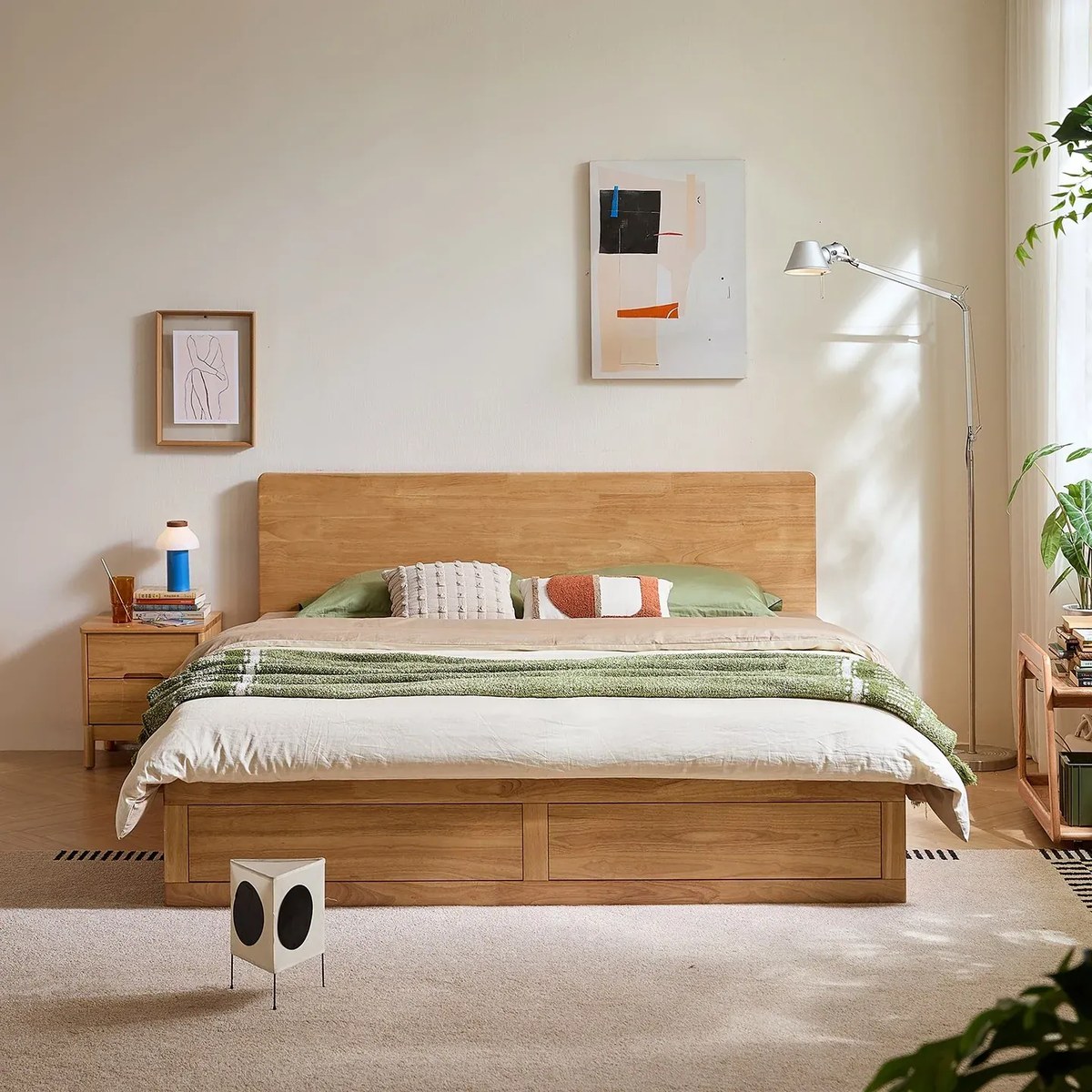
A spare quilt can disappear under almost any bed. Getting it out again, without moving a bedside table or rearranging the room, is what makes a storage bed useful.
Choose a gas lift bed frame when you want access from above and can comfortably operate the selected platform. Choose drawers when smaller compartments suit your belongings and there is room to pull them out. Some beds offer more than one storage configuration, so compare the exact option as well as the product name.
The best storage bed frame fits two routines: sleeping in the room every night and retrieving the things you put away. That might mean opening the bed a few times a year for seasonal bedding, or reaching for clothes every morning. Those are different jobs, even in the same bedroom.
Furver's range provides useful examples through Phoebe, Daphne and Evelyn. The two Evelyn listings also include options labelled with drawer storage, making it possible to compare different configurations within the range. Here is how to decide which arrangement earns its floor space.
Start with what needs a home
Before comparing mechanisms, make a short inventory. Spread out the things that currently occupy the spare wardrobe shelf, sit in bags beside the bed or overflow into another room. Separate bulky items from small ones, and frequently used belongings from things you rarely touch.
Spare quilts, seasonal blankets and guest pillows are sensible candidates for an occasional-access area. Folded clothing may be easier to manage in smaller sections that you can open individually. A suitcase is another question: its rigid shape matters as much as its overall volume, particularly if it needs to pass through a limited opening.
Measure the largest item you want to store in its packed state. For a storage bag, include the handles and any bulging sides. For a suitcase, include wheels and handles. A cavity that sounds generous in litres can still be the wrong shape for a particular object.
Then consider who will retrieve it. If two people share the bedroom, both should be comfortable with the chosen arrangement. Storage that one person can reach only when somebody else is home may be acceptable for spare bedding, but frustrating for everyday clothes. Match the mechanism to the ordinary routine before choosing the finish.
What changes between lift-up storage and drawers
Lift-up storage is reached by raising the mattress platform. Drawer storage is reached by pulling out individual compartments. This changes where you stand, what you move and how you organise the contents.
| Decision | Lift-up storage | Drawer storage |
|---|---|---|
| Access routine | Open the platform before reaching the compartment | Open the drawer containing the item |
| Space to check | The platform's movement and the operator's position | The full drawer extension and space to stand or crouch |
| Organisation | Bags or smaller containers can divide a larger area | Individual drawers provide separate sections |
| Bedroom furniture | Check headboard, bedding and nearby objects throughout opening | Check bedside tables, rugs and other furniture in each drawer's path |
| Useful trial | Open and close the bed in its approved mattress setup | Open each drawer fully and reach its back |
These are comparisons of access, not claims that one mechanism is easier for everyone. The actual lift, handle position, drawer action and working height matter. A bed with drawers on both sides may suit a centrally placed bed but lose some of its usefulness when pushed against a wall.
A combined design deserves the same scrutiny. Find out which items are accessible through drawers, which require lifting and whether those areas are separate. Count usable compartments and opening actions, rather than assuming that more mechanisms automatically create more useful storage.
Three Furver beds worth comparing
Phoebe for a leather bedhead and lift-up storage
The Phoebe Gas-lift Leather Bed offers gas lift storage in Queen and King options. Its labelled construction illustration identifies premium cowhide leather in the main contact areas, with faux leather as the secondary upholstery. This distinction matters if leather is part of your buying decision: a leather product name does not necessarily mean that every upholstered surface uses the same material.
Think about how the bedhead will be used as well as how the base opens. If you read before sleeping, try the sitting position with a mattress close to your intended thickness. The same bed can feel different when the top of the mattress sits at a different height against the cushion.
For storage, bring the dimensions of your largest bedding bag and ask to see the intended access. The product's description establishes that it has lift-up storage; your trial should establish whether the opening, reach and closing routine work for you. Phoebe belongs on the shortlist when that combination of bedhead and accessible storage suits the room.
Daphne when the cushioned back is part of the decision
The Daphne Gaslift Leather Bed combines gas lift storage with Queen and King choices, and its description highlights a high cushioned back. Like Phoebe, its construction illustration distinguishes cowhide leather contact areas from secondary faux leather upholstery.
That gives you a useful comparison with Phoebe. Look at where the back supports you when sitting, how much of it remains above the mattress and how the bedhead sits against your bedroom wall. Choose between the two through those practical differences and the exact dimensions, rather than treating a shared storage label as a complete specification.
A gas lift leather bed can answer the need for an upholstered headboard and concealed storage in one piece. It still needs the same access checks as a timber design. Keep your preferred bedhead separate from your storage assessment on the shortlist: liking one should not make you overlook an awkward opening routine.
Evelyn when you want timber and configuration choices
The Evelyn Gaslift Timber Bed in Natural Oak lists both Queen and King storage options, plus separate Queen and King options labelled “Bed with Drawer Storage”. Its materials description names rubberwood, pine and paulownia.
There is also an Evelyn Gaslift Timber Bed in Chestnut Walnut, with the same four broad storage-option labels. Its description names rubberwood, pine and paulownia as well. Chestnut Walnut is the colour name on this listing; it should not be read as a statement that the bed is made from walnut timber.
The Natural Oak page's labelled construction illustration shows a configuration with both drawers and gas lift struts. The Chestnut Walnut page includes a full-lift illustration. These are useful examples of why the configuration matters: the illustrated drawer design offers a different access routine from opening the whole platform.
Evelyn is particularly useful to compare when storage is your main decision. Save the complete selected option, including size, storage wording and finish. Ask the team to match that option to its current diagram and demonstrate which parts lift and which slide. Do not assume that every image on a page depicts every selectable option.
The two listings use the same product name, so include the link and colour on your quote. A clear order description prevents the base configuration from becoming an afterthought after you have chosen the timber tone.
Plan the room with the storage open
A bed can fit comfortably when closed and still be awkward to use. To assess a storage bed for a small bedroom, tape out its complete external footprint, then mark the space occupied while opening it. Leave the existing wardrobe, bedroom door and bedside tables in the sketch.
For a bed frame with drawers, establish their location, direction and full extension. Stand where you would actually retrieve an item. Opening a drawer just far enough to see inside is different from opening it far enough to lift out a bulky bag. Check that the handles and your hands have room as well.
A bedside table can obstruct a drawer even when it sits neatly beside the headboard. A rug can also affect the opening arrangement, depending on the design. Ask whether the drawer runs within the frame or on the floor, and test with the intended flooring or discuss the rug thickness.
With lift-up storage, check the full moving path and the position from which you operate it. Include bedding, the mattress and anything near the headboard. Do not assume a bed can sit hard against a wall simply because a product photograph shows it that way. Use the required clearances for the selected configuration.
There is also your route out of the room. An open drawer or raised platform should not turn an ordinary retrieval into an exercise in stepping around obstacles. Practise the task on your room sketch: enter, open, retrieve, close and put the item down. If furniture must move every time, decide whether that is realistic for the frequency you expect.
Queen storage bed or king storage bed
Start with the sleeping space you need and the complete room layout. A queen storage bed may leave more useful room beside it, making its storage easier to reach. A king storage bed may suit your sleeping preference, but compare the exact outer frame and access requirements before treating the larger base as a storage upgrade.
The size label does not tell you the internal compartment dimensions. Bed rails, support members and mechanisms can occupy part of the area. Drawers may also be divided differently between sizes. Ask for the usable width, depth and height of each compartment in the version you intend to order.
Height is easy to miss. A low container can use a large floor area while leaving room above it for the platform to close. A taller box may occupy less floor area but interfere with the bed's movement. Check the permitted storage height, including lids and handles, before buying a set of organisers.
Compare access on both sides if two people share the room. Keeping useful space beside a Queen can be preferable to choosing a King that allows access only from the foot. Conversely, a larger room may comfortably accommodate a King and the opening routine you want. Let the sleeping and storage plans work together.
Try the mechanism with a suitable mattress
The mattress belongs in the storage-bed decision because it sits on the moving platform of a lift-up design. Ask for the selected frame's mattress requirements, including permitted dimensions and any specified weight range. Do not assume that every mattress of the same named size is suitable for the mechanism.
If you already own a mattress, take its model details and dimensions. Obtain its weight from the mattress supplier when the bed manufacturer requires that information. Explain any topper or other component you expect to use, and ask how it affects the approved setup.
A useful demonstration follows the product's instructions. Ask the team to show the starting position, the intended grip or handle, the opening movement and the correct way to close it. Then try the permitted steps yourself. Notice whether you can reach the handle comfortably and remain in a stable position throughout the task.
Have anyone who will regularly use the storage try it too. A quick demonstration by a staff member does not answer how it will feel for the people living with the bed. If the action does not suit you, a different storage configuration may be the better purchase even when the first design looks attractive.
Keep children and pets away from the moving parts during operation, and follow the supplied instructions for any locking or support arrangement. Do not improvise props or treat the raised platform as a place for someone to sit. Ask about any operation that is unclear before using the storage at home.
For drawers, perform an equally practical trial. Open one fully, reach the back and close it from the position available in your room. Check any stated drawer load limit and whether the design has particular removal or refitting instructions. A smooth demonstration with an empty compartment is only one part of choosing how you will use it.
Compare useful capacity, not just the largest number
Storage capacity is useful when you know what has been measured. Ask whether a published figure describes one size, all compartments combined or a particular configuration. If the option includes both lift-up storage and drawers, establish which areas are counted.
For most households, a few practical measurements are more useful than a litre figure alone. Write down the internal dimensions, the opening dimensions and any obstruction that affects your largest item. A bag can fit within the cavity yet be difficult to manoeuvre through its opening.
Keep storage load limits separate from the bed's sleeping load rating. A rating for the bed as a whole does not establish how much a drawer bottom or compartment panel can carry. If you intend to store dense items, describe them and obtain the relevant limit rather than distributing them by guesswork.
You can also test the proposed organisation at home. Arrange the bags or containers within a taped rectangle matching the confirmed storage area. Leave space to grasp them. This simple exercise often shows whether an extra compartment is useful or whether it would divide the space in the wrong place for your belongings.
Make the storage routine easy to keep
Put frequently used items near the easiest access point. Keep occasional items further away, provided they remain safely reachable. Label opaque bags clearly enough to read from the opening; lifting several bags to find the right one soon makes a large compartment feel inconvenient.
Store bedding clean and fully dry, and follow the bed and mattress care instructions for ventilation. Avoid packing items so tightly that they obstruct the mechanism, press against moving parts or prevent the platform from closing as intended. An unused gap around a moving component is not spare storage space.
For drawers, organise by task rather than filling every available corner. One section for spare sheets and another for seasonal clothing can make retrieval simpler. Choose containers only after checking the actual internal measurements, including any space lost around runners or fittings.
Think ahead to cleaning. Establish how the storage area is accessed for routine care and whether any drawers are designed to be removed. Follow the product instructions rather than lifting or dismantling parts because they appear detachable. Keep the assembly and care information somewhere accessible outside the bed.
Include assembly and delivery in the decision
Phoebe, Daphne and both Evelyn listings specify full assembly in their detailed product information. That matters when planning a bedroom changeover. Allow room to unpack the components, organise the hardware and follow the installation sequence before filling the base with belongings.
Furver's shipping and delivery policy states that products arrive in their original packaging and that standard delivery excludes assembly, unboxing and packaging removal. Confirm any additional help separately and include it in the total purchase cost.
Check the packed dimensions of the largest components against your delivery route. A frame assembled inside the room may still include a long or broad component that is awkward at a stair landing or lift entrance. Give the team photographs and measurements of tight turns rather than relying on the bedroom dimensions alone.
Before ordering, keep the exact model, size, finish and storage configuration together with your mattress details and access questions. Our Auburn showroom visit checklist can help you prepare. Confirm that the specific configuration you want to try is available before travelling.
Choose the access you will use after the first week
If the main job is storing seasonal bedding, shortlist a lift-up arrangement you can operate comfortably and organise in manageable bags. If you need separate items every day, give drawer access serious consideration and check every opening against your room. For a combined option, identify the role of each compartment before choosing the configuration.
Phoebe and Daphne offer leather-bedhead choices with gas lift storage. Evelyn adds timber finishes and distinct storage-option labels worth comparing in person. Choose the complete arrangement that works with your mattress, belongings and furniture, then keep those details on the order. The useful storage bed is the one you can access without turning a small task into a room rearrangement.